

How to Plan a Rewarding Visit to Southern Highlands Botanic Gardens
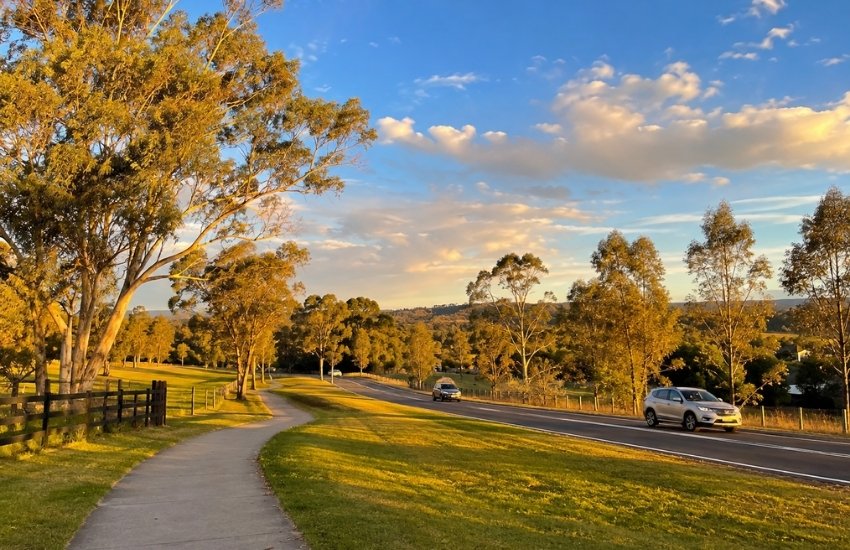
Southern Highlands Botanic Gardens is a community-funded cool-climate garden in Bowral, with nationally registered plant collections, seasonal planting, picnic spaces and a fully fenced children’s playground.
The most useful planning details are what has already been developed, which plants are strongest in each season, how the fenced and unfenced precincts differ and whether daily facilities suit your group.
This guide places those essentials first, then adds practical routes for families, gardeners and shorter visits so you can use your time well.
About Southern Highlands Botanic Gardens
The garden opens from 9:00 am to 5:00 pm every day, including public holidays. General admission is free, although selected events may charge an entry fee or temporarily alter ordinary access arrangements.
| Visitor information | Current details |
| Address | 1 Old South Road, Bowral NSW 2576 |
| Opening hours | Daily, 9:00 am–5:00 pm |
| General admission | Free, except for selected advertised events |
| Main entrance | Pedestrian Gate 2 from the Old South Road car park |
| Parking | Off-street parking accessed from Old South Road |
| Public transport | Bus route 815 passes the garden but does not operate on Sundays |
| Playground | Fully fenced and open from 9:00 am–5:00 pm |
| Picnic facilities | Two shelters with wheelchair-accessible tables |
| Dogs | Not allowed in the fenced garden; leashed dogs permitted in the eastern precinct |
| Telephone | 0456 752 595 |
| admin@shbg.com.au |
The main fenced garden, playground and established visitor facilities are accessed through Gate 2. The unfenced eastern precinct has separate entry points from Kangaloon Road, Alice Avenue and Robinia Drive, so visitors arriving specifically for the main collections should use the Old South Road car park.
What Makes This Cool-Climate Garden in Bowral Different?
Southern Highlands Botanic Gardens Bowral is operated by a not-for-profit charitable company and supported through volunteers, donations, grants, nursery income and community events. Its purpose is to establish native and exotic plant collections that represent four distinct seasons in a cool-climate environment.
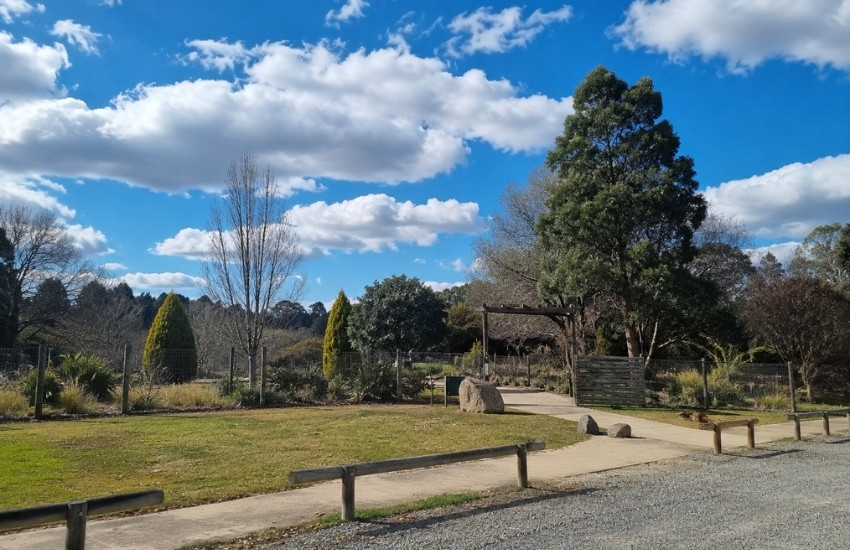
This is a young, developing garden rather than a completed historic estate. Established areas include the Foundation Walk, Birch Grove, Oak Rondell, Winter Garden, playground and perennial borders, while planned work includes additional paths, ecological planting and further development around the Ponds of Reflection.
That distinction helps set the right expectation. You are visiting both a garden and an active horticultural project, with mature collections sitting beside areas that reveal how the broader landscape is still taking shape.
Visitors who want to balance formal planting with a longer walk can add a memorial path, bushland reserve or organised sporting activity to the day. Compare terrain, facilities and time commitments in our guide to outdoor experiences in Bowral.
What Can You See at the Bowral Botanical Gardens?
The garden’s strongest current features combine registered collections, seasonal planting, sculpture and habitat restoration. Four collections appear on the National Plant Collections Register: Betula or birch, Buxus or boxwood, dwarf Cornus or dogwood, and the Tony Davis daffodils.
Established garden highlights
- Foundation Walk: The garden’s first planting includes seasonal crab apples, endemic Cabbage gums and a Bunya Bunya planted by the NSW Governor in 2010. John Olsen’s Leaping Frog is positioned along this walk.
- Birch Grove: The registered collection contains more than 20 birch types, including river, paper, Korean and Himalayan birches. Their bark, upright forms and deciduous foliage provide interest beyond the flowering season.
- Tony Davis Daffodil Collection: More than 60 locally bred daffodils grow beneath the birches. Many carry Southern Highlands names, and the official garden guidance recommends late winter for seeing the collection flower together.
- Oak Rondell: Narrow upright oaks form a circle above weeping boxwood, with inscribed pavers commemorating local residents, supporters and family members. Seating makes this one of the established places to pause rather than simply pass through.
- Winter Garden: Dwarf dogwoods produce red, yellow and burgundy stems, with colder conditions strengthening their colour. The planting occupies damp ground beside the bird habitat area and is intended to provide low cover for smaller birds.
- Eastern native precinct: Development includes restoration of Southern Highlands Shale Woodland and planned native wattle and conifer collections near the Ponds of Reflection. The woodland is an endangered ecological community associated with the region.
For visitors comparing gardens to visit in Bowral, these features provide more than a general flower display. The site connects identifiable plant collections with local breeding history, habitat restoration and the continuing development of a public garden.
Best Time to Visit the Botanic Gardens in Bowral
The best season depends on the plant attribute you want to see. Official garden information identifies spring and summer with stronger flowering, autumn with richer foliage and winter with bark, coloured stems and cold-season flowers.
| Season | Best suited to | Highlights |
| Late winter and spring | Visitors prioritising flowers | More than 60 Tony Davis daffodils grow beneath the Birch Grove, with the collection recommended for late-winter viewing. |
| Summer | Visitors combining planting with a picnic | Spring and summer bring stronger flowering, while the garden provides two all-weather picnic shelters and a shaded playground. |
| Autumn | Visitors interested in deciduous foliage | The official walking-tour guidance identifies rich autumn colour, and the Birch Grove is promoted for its autumn light and foliage. |
| Winter | Visitors interested in bark and garden structure | The garden highlights birch bark, winter flowers and dwarf dogwood stems that become more colourful in colder conditions. |
Late winter offers the most specific seasonal target because the locally bred daffodils provide a confirmed collection rather than a general promise of flowers.
Spring visitors can experience another style of floral display in central Bowral, where Corbett Gardens becomes the centre of Tulip Time. Review the event dates, ticket conditions and practical arrangements in our Bowral Tulip Festival 2026 guide.
Autumn is the stronger choice among Southern Highlands gardens when your interest lies in deciduous colour, while winter rewards closer attention to bark, branches and coloured stems.
Flowering dates and leaf colour can shift with seasonal conditions. Check recent garden updates before travelling for one particular display rather than relying on a fixed annual peak date.
When persistent rain makes garden paths less appealing, having an indoor alternative prevents the day from feeling lost. Our guide to things to do in Bowral on a rainy day compares museums, galleries, antiques, cinema and sheltered wine tasting.
Is the Botanic Gardens in Bowral Suitable for Families?
The fully fenced playground makes the garden one of the more practical things to do in Bowral for families with younger children. Its equipment includes an adventure tower and slide, climbing walls, a play village, crawling tunnel, baby, toddler and junior swings, interactive panels, talk tubes, a shade sail and a picnic bench inside the enclosure.
Two additional picnic shelters have all-weather roofs and wheelchair-accessible tables. They overlook maples, dwarf dogwoods and the bird habitat, allowing a family visit to include both active play and a quieter meal outdoors.
For an ordinary daily visit:
- Bring your own food and drinks, as coffee vans and food stalls are tied to selected events.
- Use the playground enclosure when younger children need a contained play area.
- Pack hats and sun protection because shade varies across the developing garden.
- Take all food packaging and rubbish with you when leaving.
- Check the event calendar before expecting organised children’s activities.
The garden does not specify a minimum or recommended visit duration. Families can therefore focus on the playground, one picnic stop and two or three nearby garden features without treating the full site as a compulsory walking circuit.
A flexible garden visit is easier when the accommodation also supports the children’s daily routine. Our guide to Bowral family accommodation compares room capacity, baby equipment, kitchens, play spaces and indoor facilities.
How Can You Plan Your Route Through the Bowral Garden?
Many competitor listings describe what the garden contains but do not help readers decide which features to prioritise. A more useful approach is to build the visit around your audience and choose a small number of evidence-backed stops.
For A First Visit Focused On The Garden
Prioritise the Foundation Walk, Birch Grove, Oak Rondell and Winter Garden. These four areas cover the first formal planting, two national collections, commemorative landscape design and the garden’s strongest cold-season planting.
For A Family Visit
Combine the fenced playground, one picnic shelter and either the Birch Grove or Foundation Walk. This route keeps younger children close to dedicated facilities while giving adults access to established trees, sculpture and seasonal planting.
For A Plant-Focused Visit
Book a volunteer-led walking tour, available Monday to Friday except public holidays, then check whether the nursery is open. Tours explain the native and exotic areas, current collections and seasonal interest; morning tea can be added for an extra charge.
Nursery access follows a different schedule from the daily garden opening hours. Plant stock also changes with demand, so gardeners looking for a particular species should check availability before travelling specifically to make a purchase.
What Access, Dog and Visitor Rules Apply at the Bowral Garden?
The main practical distinction is between the fenced visitor garden and the unfenced eastern precinct. Dogs and bicycles are prohibited inside the fenced area, while leashed dogs and bicycles are permitted in the eastern native precinct.
| Planning point | What it means for your visit |
| Gate 2 | Use this entrance for the main garden, playground and picnic shelters |
| Eastern precinct | Use the Kangaloon Road, Alice Avenue or Robinia Drive access points |
| Dogs | Keep pets out of the fenced garden and on a lead in the eastern precinct |
| Bicycles | Leave bikes outside the fenced area |
| Sunday transport | Do not rely on route 815, as the service does not run on Sundays |
| Mobility access | Accessible picnic tables are available; contact the operator about specific paths or event areas |
Individual event rules may be stricter than ordinary daily access. For example, the 2026 Open Day prohibited dogs because the event area included protected bird habitat used by the migratory Latham’s snipe.
Visitors with mobility requirements should contact the garden before arrival for route-specific advice. Visit NSW lists disabled access as available but directs visitors to the operator for detailed arrangements.
Pet owners should also confirm where their dog can stay when the main attraction applies restricted animal access. Compare designated rooms, enclosed gardens, fees and supervision conditions in our guide to pet-friendly accommodation in Bowral.
Before travelling, check the official website for temporary closures, event tickets, nursery availability and guided activities. Regular opening hours are 9:00 am–5:00 pm daily, but occasional advertised events may introduce different admission or access conditions.
Where Can You Stay During a Bowral Garden Weekend?
Links House offers welcoming accommodation in Bowral for visitors pairing the garden with Bowral’s galleries, village shopping and seasonal dining. The heritage guesthouse was built in 1928 and has 17 rooms with ensuite bathrooms, rear parking, gardens, three courtyards and the fireside Leslie Lounge.
Guests can review the available rooms and suites at Links House before selecting accommodation for a couple, family or small group. Breakfast is included with an overnight stay, allowing the day to begin slowly before setting out for the garden.
After returning, Ethos Restaurant provides onsite dining, while the courtyards and Leslie Lounge offer quieter places to settle after time outdoors. The hotel’s supplied material confirms that Ethos also provides breakfast, lunch, dinner and casual dining formats for in-house and organised groups.